Macaroon
MACAROON, ITLAY
9TH CENTURY
OTHER NAMES: congolais (in French), "mackaroon," "maccaroon" and "mackaroom"
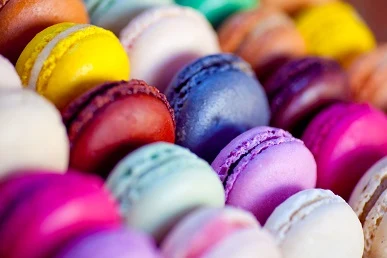
Many people confuse between “macaron” and “macaroon.” Macaron is a sandwiched cookie invented in France during the 20th century. Macaroon, which is what we are going to discuss now, is basically a macaron without filling.
The earliest recorded macaroon recipes are similar to an almond meringue, with a crisp crust and a softer interior. Culinary historians claim that macaroons can be traced back to an Italian monastery in the 9th century. In 1533 the monks came to France and joined by the pastry chefs of Catherine de Medici, wife of King Henri II. [1]
Macarons then find its way to different varieties depending on regional resources and culture. First, Italian Jews adopted the cookie for its eight-day observation of the holiday, Passover, because it has no flour or leavening. [2]
It was introduced to other Europeans and end up with a different macaroon variation. For example, coconut macaroons are introduced with an added ingredient discovered in 1890s called shredded dried coconut. This specific recipe became relatively popular in Australia, the United States, The Netherlands (Kokosmakronen) and Germany. [1]
It is often confusing to discuss about the history of macaron and macaroon because they are very similar in spelling and sound. As a result people tend to use the terms with confusing meaning.
BASIC INGREDIENT:
Egg whites, sugar, ground almonds/almond paste
Optional: coconut, potato starch, dipped in chocolate
Coconut Macaroon
Almond Macaroon
Indian Macaroons made with Cashew