Royal Game of Ur
Royal Game of Ur
Patterns on Royal Game of Ur's Board
Pieces in 2 colors
ROYAL GAME OF UR
EGYPT
3RD MILLENNIUM BCE
OTHER NAMES: Asseb (in Egypt), The Game of Twenty Squares
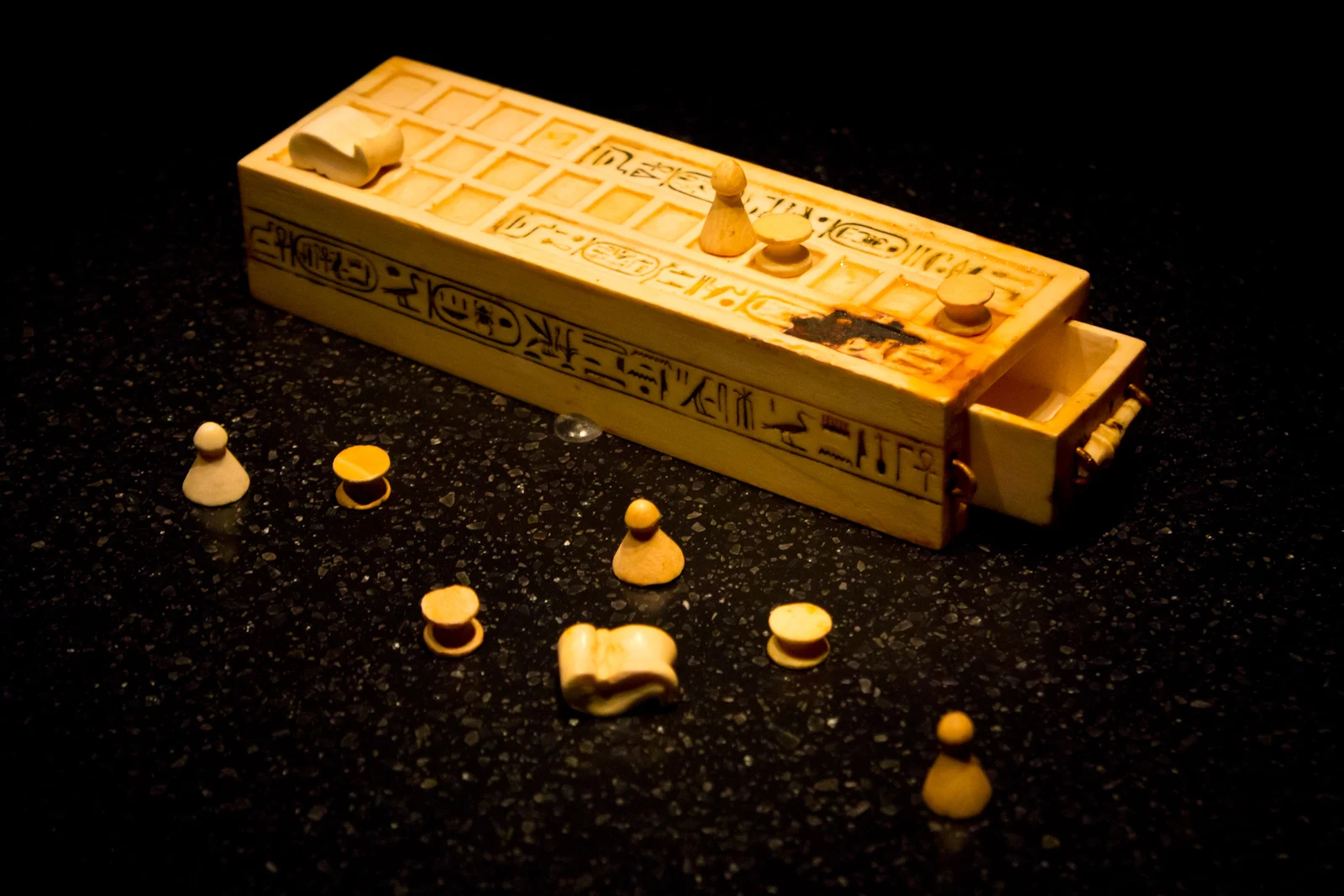
The Royal Game of Ur is an ancient Egyptian board game that is still played today by the name The Game of Twenty Squares, and it belongs to the race game family. The game consists of two sets of seven markers and four dice.
ORIGIN
Archaeologist Charles Leonard Woolley and his team discover the first intact version of the game in an archaeology dig of the royal city of Ur. The game was estimated to be created around 2600-2400 BC. (1) Although much has recovered from archaeology for this piece of ancient entertainment, there is still much to be learned about the Royal Game of Ur as some of the pieces did not survive through time.
HISTORY
In Egypt, the game was also known as Asseb, and It was found in Pharaoh Tutankhamen's tomb.
THE GAME
The board has 20 squares made out of shell: there are 5 squares of flower rosettes, 'eyes', and circled dots. The remaining five squares have various designs of five dots. According to references in ancient documents, it is a two-player game. The objective is to compete to race their pieces from one end of the board to another by rolling the dice. (2)
TODAY
This game is still able to be played either from reproduction of it or digital sources that host the game online, it is also often referenced in popular media as well.