Kenyan Chai
HISTORY
Tea was firstly introduced to Kenya by an European man named G.W. L. Caine in 1903. The first tea grown for cultivation and consumption started in 1918 on a plantation called Kiambethu Farm. Over the years, tea growing region has expanded to the Great Rift Valley and Nairobi. [5] Today, Kenya exports more tea than India, Sri Lanka, and China. [6]
PREPARATION
In Kenya, Chai is commonly prepared in a large pot. Depending on the region, tribe, or social class in Kenya, Chai is made differently. At some regions, they use goat milk rather than cow milk. [7]
Serving Tea at a Community Gathering
Chai Made in Big Bucket
Tea with Mandazi
In Swahili (and Hindi), Chai means tea. While many people like to enjoy tea with snacks, Kenyan tea often goes well with a snack called Mandazi or mandaazi, a semi-sweet fried bread originated from Eastern Africa. [1]
FLAVOR
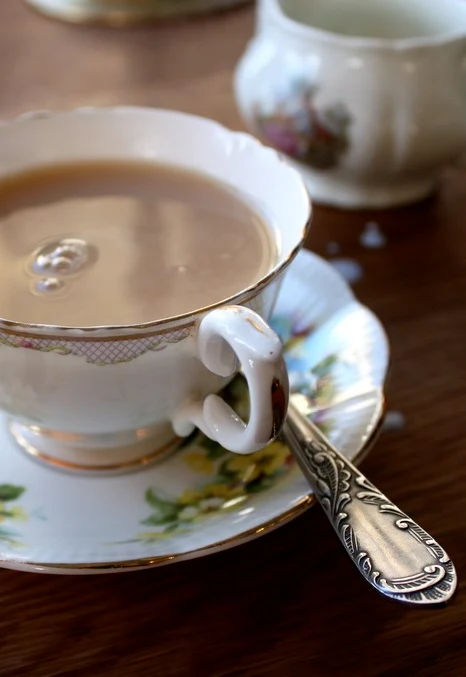
Compare to Indian Chai, Kenyan Chai usually adds a lot more sugar, which makes it sweeter. [2] The recipe can be as simple as mixture of tea, milk, and sugar, omitting Masala mix. (Asian spice mixture) [3]
CULTURE
In Kenya, tea is enjoyed anytime. It is served at breakfast, morning break, after lunch, afternoon tea, after dinner. According to Sadia's Tea Party, "Teatime [in Kenya] is a custom borrowed from the British colonial past and tea making style originated in India with some African influences." [4] Like many tea cultures around the world, Chai is served as a part of showing hospitality to guests and visitors.